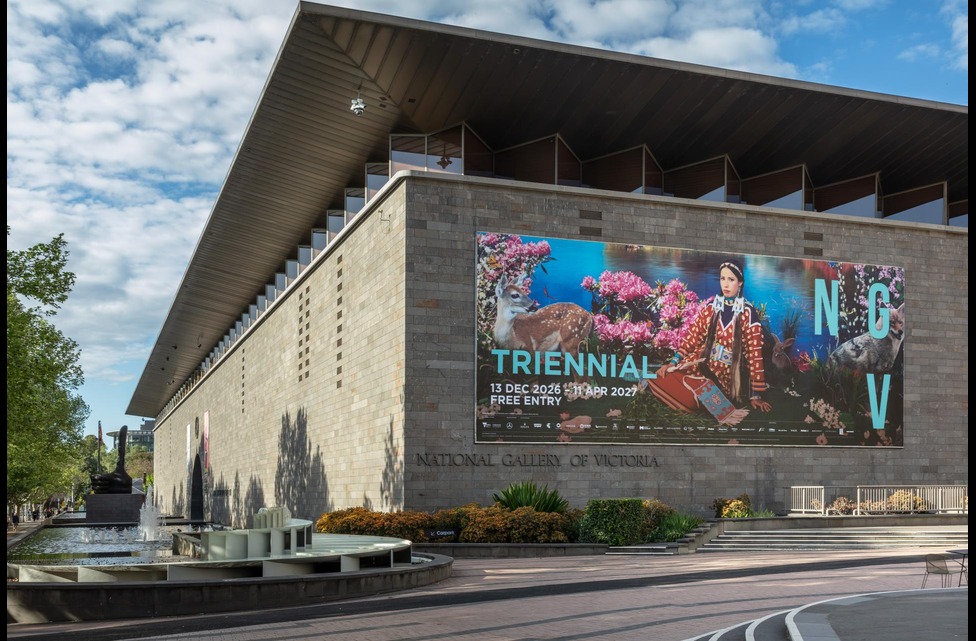
PCAI is happy to announce the participation of PCAI collection artists Wu Tsang and Mika Rottenberg in the 2026 NGV Triennial at the National Gallery of Victoria (NGV International) in Melbourne, which opens on December 13, 2026 and will be on view until 11 April 2027.
Featuring more than eighty ambitious and thought-provoking projects, including major new commissions, the 2026 NGV Triennial offers a global journey through contemporary art and design.
Unfolding across all four levels of NGV International, the fourth NGV Triennial brings together the work of some of the most respected artists and designers from around the world, while amplifying the voices of emerging talents.
Spanning painting, photography, video, sculpture, installation, fashion, textiles, ceramics and design, the exhibition places contemporary works in dialogue with the NGV’s historical collections.
Across the exhibition, artists and designers explore transformation in its many forms – material, cultural, technological, personal, political and societal – revealing the present as a site of continuous change.
Artworks
Mika Rottenberg:
Spaghetti Blockchain takes its name from an element within the video itself: a blockchain-like structure made of raw spaghetti, held together by nodes of marshmallows. The video threads together a diverse array of images and sounds, from Tuvan throat singing to the large Hadron Collider at the European Organization for Nuclear Research (CERN), to explore how energy and objects circulate and mutate across states of matter. Bodies, voices, energy, food, infrastructure and digital technologies are drawn into an associative field where matter circulates, transforms, vibrates and accumulates. From these improbable juxtapositions a vision of digital capitalism emerges not as an abstract system of exchange, but as a sticky, material condition inseparable from contemporary life.
Wu Tsang:
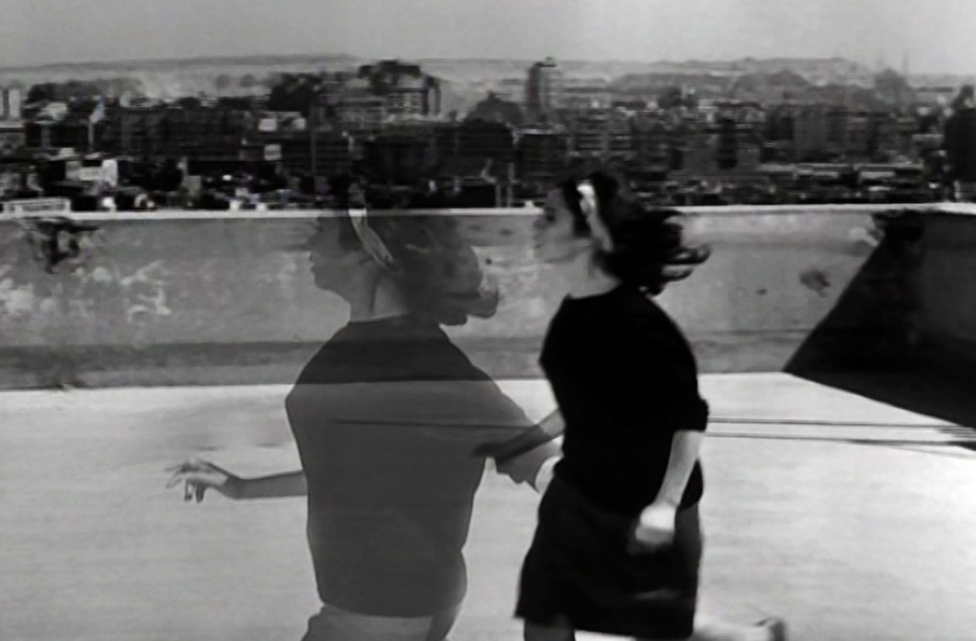
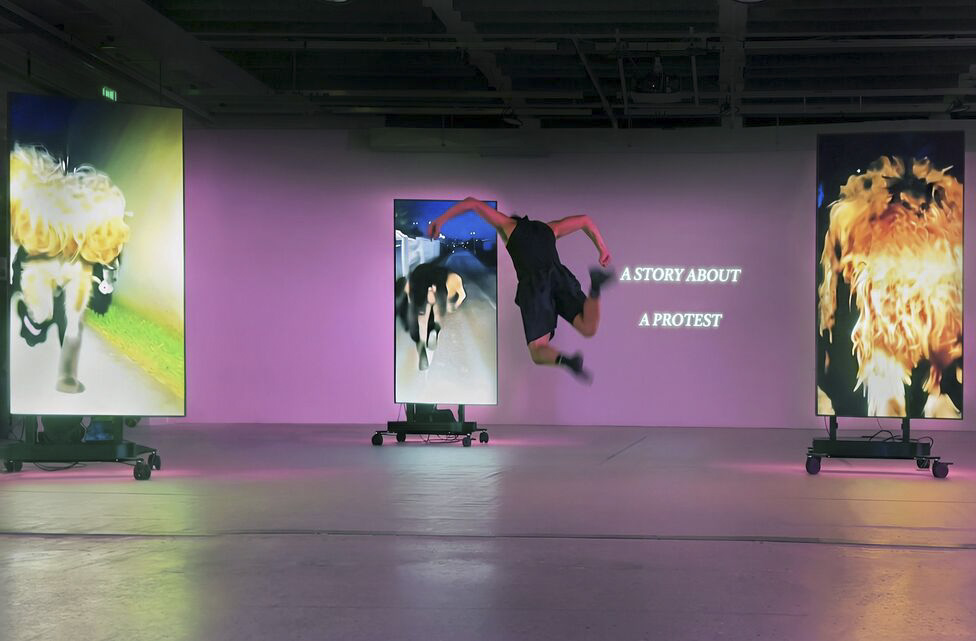
Like George Bizet’s opera, Wu Tsang’s reimagining of Carmen centres on the performative worlds of flamenco and bullfighting, where death becomes spectacle. These cornerstones of Andalusian culture both place mortality centrestage, implicating the viewer in ritual. As a Spanish Romani woman, Carmen experiences multiple forms of marginalisation – racial, gender and class-based – and is bound to a tragic fate. With its spatial audio, the film evokes a sense of impending horror. Yet unlike Bizet’s opera, Tsang’s work suggests a possible escape from Carmen’s tragic destiny.
Read more here.

Activity aligned with Goals 3, 4,5,7, 8, 10,11, 12,15, 16, 17